
Book 5, Question 6
Horns and a Frill! Why Did Triceratops Have Both?
Triceratops had horns and a frill to defend itself, show off, and tell other Triceratops apart.
Triceratops had three horns and a wide bony frill behind its head. Scientists think these could have helped in defense, in showing off, and in telling one Triceratops from another. Fossil skulls give clues, but scientists are still working out the whole story.
Watch the videoWatch on YouTubeSee the series on Amazon
Quick answers
What does Triceratops mean?
Triceratops means three-horned face: two horns above its eyes and a smaller one above its mouth.
Did Triceratops really fight?
Yes. Old wounds on fossil skulls show that Triceratops really did fight with its horns.
Sources: National Geographic Kids, National Geographic, National Geographic
From the book
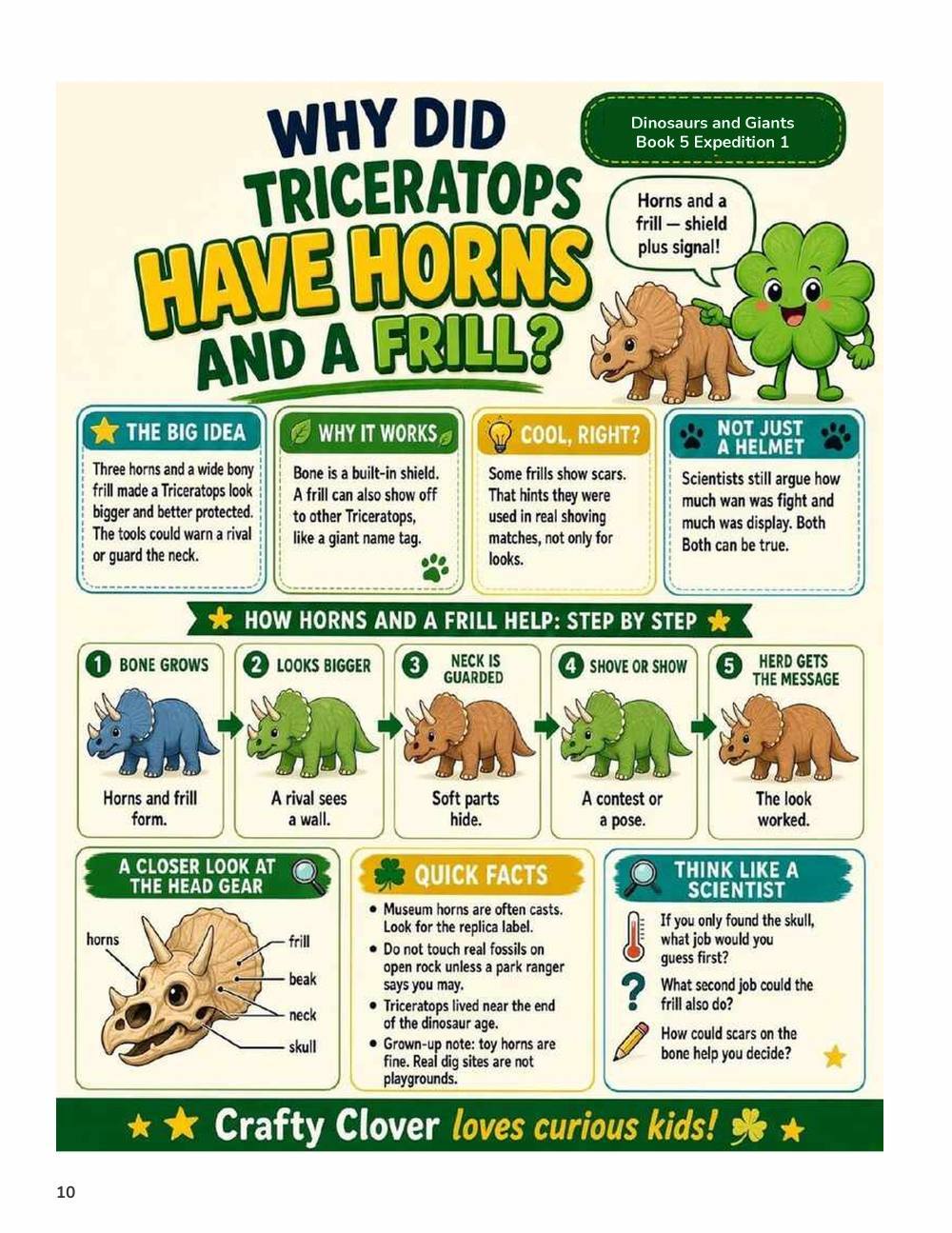
Page from A Million Whys Book 5
More fun facts
- Triceratops means "three-horned face": two horns above its eyes and a smaller one above its mouth.
- Some adult Triceratops skulls are 10 feet long.
- Old wounds on fossil skulls show that Triceratops really did fight with its horns.
- Its giant neck frill may have protected it during these fights.
- Horn size and shape changed so much as Triceratops grew that scientists first thought young and old ones were different species.
- Triceratops used its beak-like jaw and slicing teeth to eat tough plants.
Sources: National Geographic Kids, National Geographic, National Geographic
Questions kids ask
Did Triceratops fight each other?
Yes. Injuries on fossil skulls show they locked horns, a bit like deer clashing antlers.