
Book 1, Question 125
Why Does Glue Stick? A Handshake at the Surface!
Glue sticks by flowing into tiny pits on two surfaces, grabbing both and then hardening to hold them together.
Glue is a sticky handshake between two surfaces. Wet glue flows into tiny surface pits, grabs both sides like a handshake, and then dries or sets and holds. The page says glue needs clean, dry surfaces to work well. Compare tape on clean paper with tape on dusty paper to see the difference.
Watch the videoWatch on YouTubeBuy on Amazon
Quick answers
How old is glue?
Neanderthals used tar glue at least 200,000 years ago to attach stone points to handles.
How do geckos stick?
Geckos use millions of tiny hairs on their toes called setae.
Sources: Science News Explores, Smithsonian Magazine, Science News Explores, Science News Explores
From the book
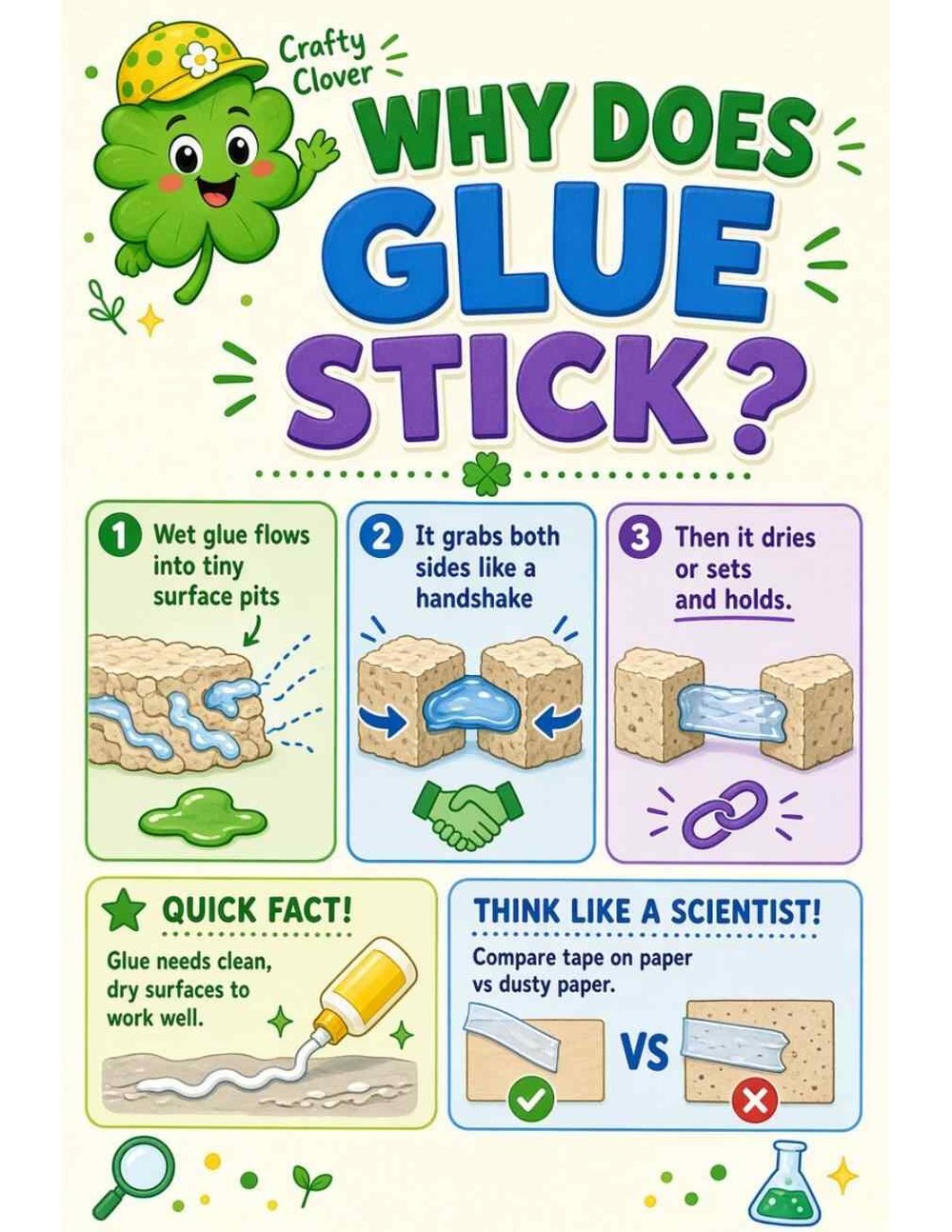
Page from A Million Whys Book 1
More fun facts
- Glue is one of the oldest human inventions. Neanderthals used tar glue at least 200,000 years ago.
- They used it to attach stone points and axe heads to wooden handles.
- That tar was likely made from birch bark, and scientists have shown it can be made with just wood scraps and hot embers.
- The earliest known evidence of our own species making tar is from about 70,000 years ago in Africa.
- Geckos stick to walls using millions of tiny hairs on their toes called setae.
- Mussels are great at sticking to rocks and boats, and scientists study them to make better sticky materials.
Sources: Science News Explores, Smithsonian Magazine, Science News Explores, Science News Explores
Questions kids ask
Who made the first glue?
Neanderthals made tar glue at least 200,000 years ago.
How do geckos stick to walls?
Tiny hairs on their toes, called setae, grip surfaces.