
Book 6, Question 99
Why Do Scientists Plant Coral?
Scientists plant coral to help damaged reefs recover, growing small pieces in nurseries and moving them to the reef.
Scientists grow tiny pieces of coral in nurseries. Then trained teams attach them to damaged reefs, where they can grow into new colonies. It gives a broken reef neighborhood a head start to grow back!
Watch the videoWatch on YouTubeSee the series on Amazon
Quick answers
What is coral fragmentation?
A healthy coral is carefully cut into small pieces that grow into new colonies.
Sources: NOAA Ocean Service, NOAA, Scientific American, NOAA Ocean Service
From the book
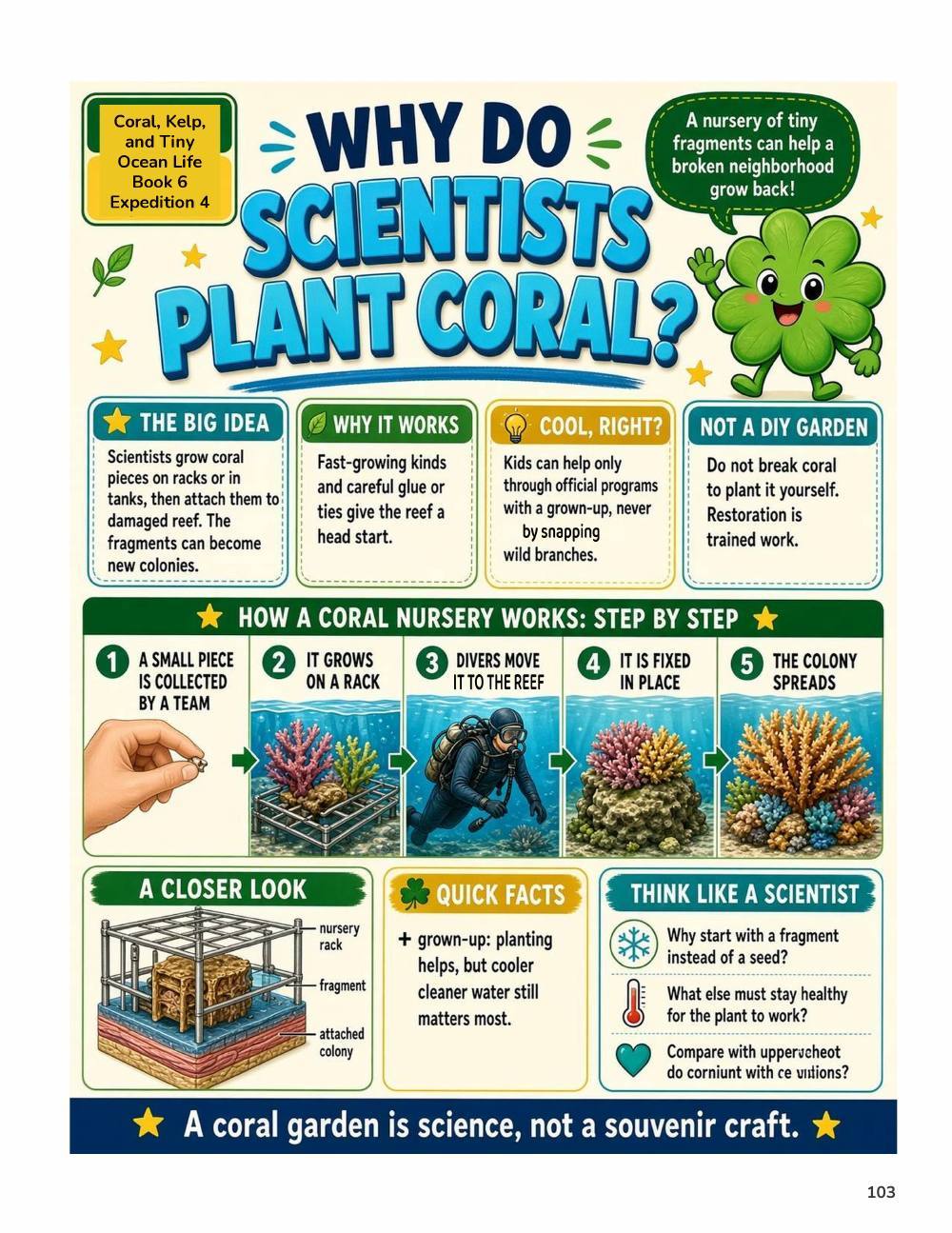
Page from A Million Whys Book 6
More fun facts
- In coral fragmentation, a healthy coral is carefully cut into small pieces that grow into new colonies.
- The new corals are planted back onto reefs damaged by hurricanes or boats.
- Scientists grow corals in underwater and land nurseries, then move them to damaged reefs.
- Tiny coral pieces the size of a pencil eraser can grow 25 to 50 times faster than normal, thanks to a natural healing response.
- In nature, a broken piece of coral can reattach to the bottom and keep growing by cloning itself.
- Keeping wild corals in aquariums on land helps save the variety of reef corals for the future.
Sources: NOAA Ocean Service, NOAA, Scientific American, NOAA Ocean Service
Questions kids ask
How do scientists grow new coral?
They cut healthy coral into small pieces, grow them in nurseries and plant them on damaged reefs.