
Book 5, Question 69
Crack and Crumble! Another Look: How Weather Breaks Rock
Weather breaks rock slowly as water, ice, heat, cold, salts and even plant roots wear it down.
Rock is tough, but weather works on it slowly. Water, wind, heat, and cold can all wear it down, and even plant roots can push into cracks. Bit by bit, big rocks turn into smaller pieces that can become sand and soil.
Watch the videoWatch on YouTubeSee the series on Amazon
Quick answers
Where can you see weathering?
Utah's Cedar Breaks National Monument is a giant bowl of colorful rock spires shaped by weathering and running water.
Sources: National Geographic Education, NASA Science, National Park Service, National Park Service
From the book
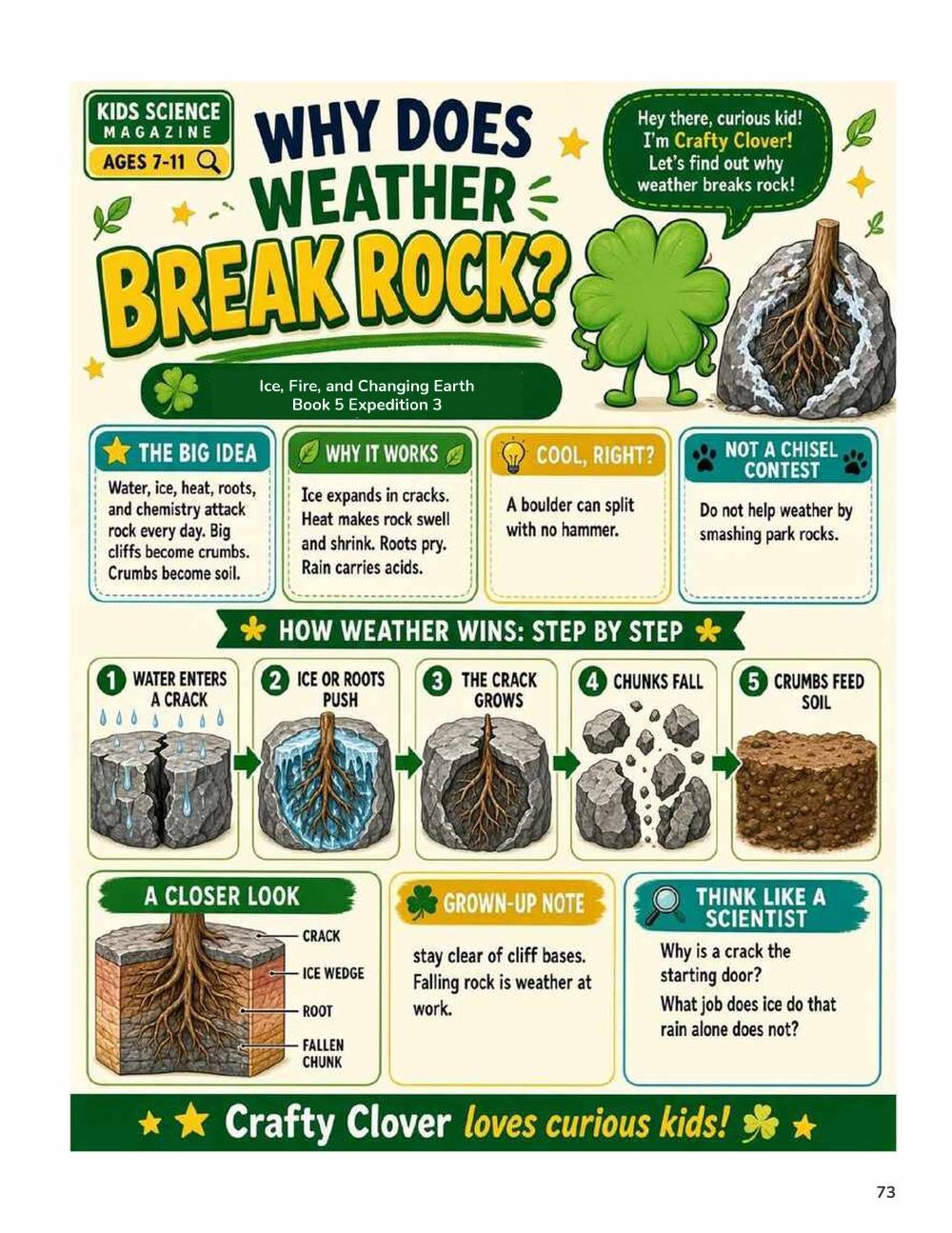
Page from A Million Whys Book 5
More fun facts
- Water, ice, acids, salts, plants, animals and temperature changes can all break down rock.
- Utah's Cedar Breaks National Monument is a giant bowl of colorful rock spires shaped by weathering and running water.
- Many of Cedar Breaks' limestone layers began as muds that settled on the bottom of an ancient lake.
- The rim of Cedar Breaks sits about 10,000 feet above sea level.
- Rain mixed with a little acid from rotting leaves can dissolve holes in rock.
- In spring, melting ice and growing plants make rock crumble faster in places like Black Canyon of the Gunnison National Park.
Sources: National Geographic Education, NASA Science, National Park Service, National Park Service
Questions kids ask
Can salt break rock?
Yes. Salts are one of the things scientists list that can weather rock over time.