
Book 3, Question 123
Why Do Marching Bands Stay in Step?
Marching bands stay in step by following a shared beat, often from the drums.
Staying in step is all about shared timing. A drum cadence gives every player the same beat. So dozens of feet land together, instead of turning into a shuffle!
Watch the videoWatch on YouTubeBuy on Amazon
From the book
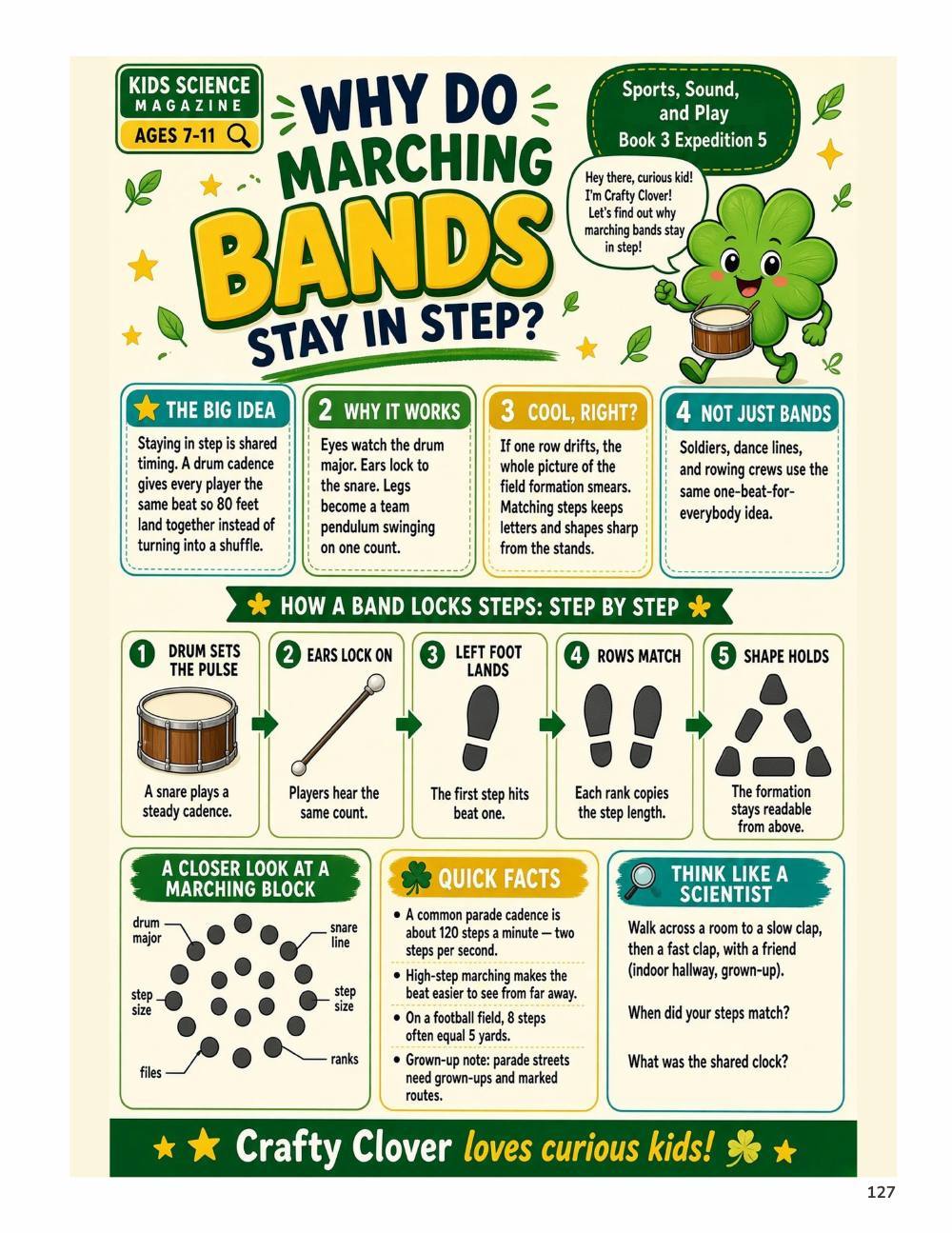
Page from A Million Whys Book 3
More fun facts
- People knew how important it was to march in step all the way back in ancient times.
- Roman soldiers did not use music to stay in step, but they used it to feel brave and united.
- In Europe, keeping soldiers in step with music goes back to Switzerland in the 1400s, where fife and drum playing began.
- A fife is a small flute, and it is also called the Swiss flute.
- Armies across Europe had one fifer and two drummers for every company of 100 soldiers.
- When companies joined into a bigger group called a regiment, their fifers and drummers formed a regimental band.
- A military drill manual says soldiers keep in step by counting one, two, three, four, and a drummer's beat can set the pace.
- Running in step is called double time, twice as fast as regular marching, called quick time.
Sources: Umass
Questions kids ask
Where did marching bands come from?
From army fifers and drummers. When companies joined into a regiment, their musicians formed a regimental band.