
Book 2, Question 1
Why Do We Forget Why We Walked In?
Forgetting why you walked into a room is called the Doorway Effect, and it happens because your memories lean on the place you are in, so a new room can reset your plan.
Have you ever walked into a room and thought, wait, why did I come in here? Your brain makes a plan in one room. Then a doorway can reset that plan!
Watch the videoWatch on YouTubeBuy on Amazon
Quick answers
Is it normal?
Yes. A health team at the National Institutes of Health says most people have walked into a room and forgotten why.
Does being busy make it worse?
Being very busy can make you forget more, because your brain is juggling lots of jobs.
Sources: BBC, National Institutes of Health, BBC
From the book
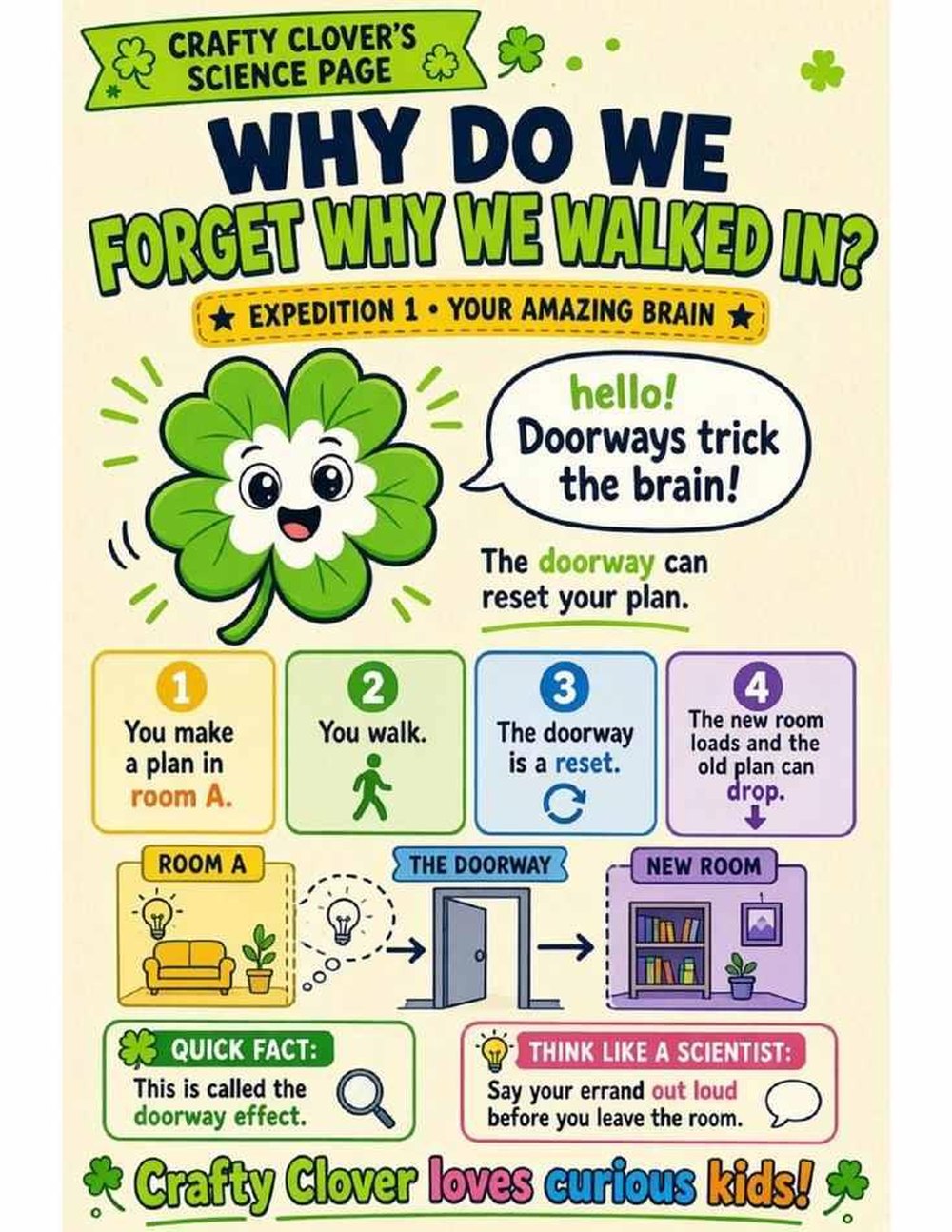
Page from A Million Whys Book 2
More fun facts
- Forgetting why you walked into a room even has a name. Scientists call it the Doorway Effect.
- Psychologist Tom Stafford says the Doorway Effect shows how memory works well, not just how it fails.
- Our memories, even memories of what we were about to do, lean on the place we are in.
- A health team at the National Institutes of Health says most people have walked into a room and forgotten why.
- Forgetting little things now and then is a normal part of life.
- Being very busy can make you forget more, because your brain is juggling lots of jobs.
Sources: BBC, National Institutes of Health, BBC
Questions kids ask
Is it bad to forget why I walked into a room?
No. Forgetting little things now and then is a normal part of life, and it happens to almost everyone.