
Book 7, Question 24
Why Do Weather Balloons Go So High?
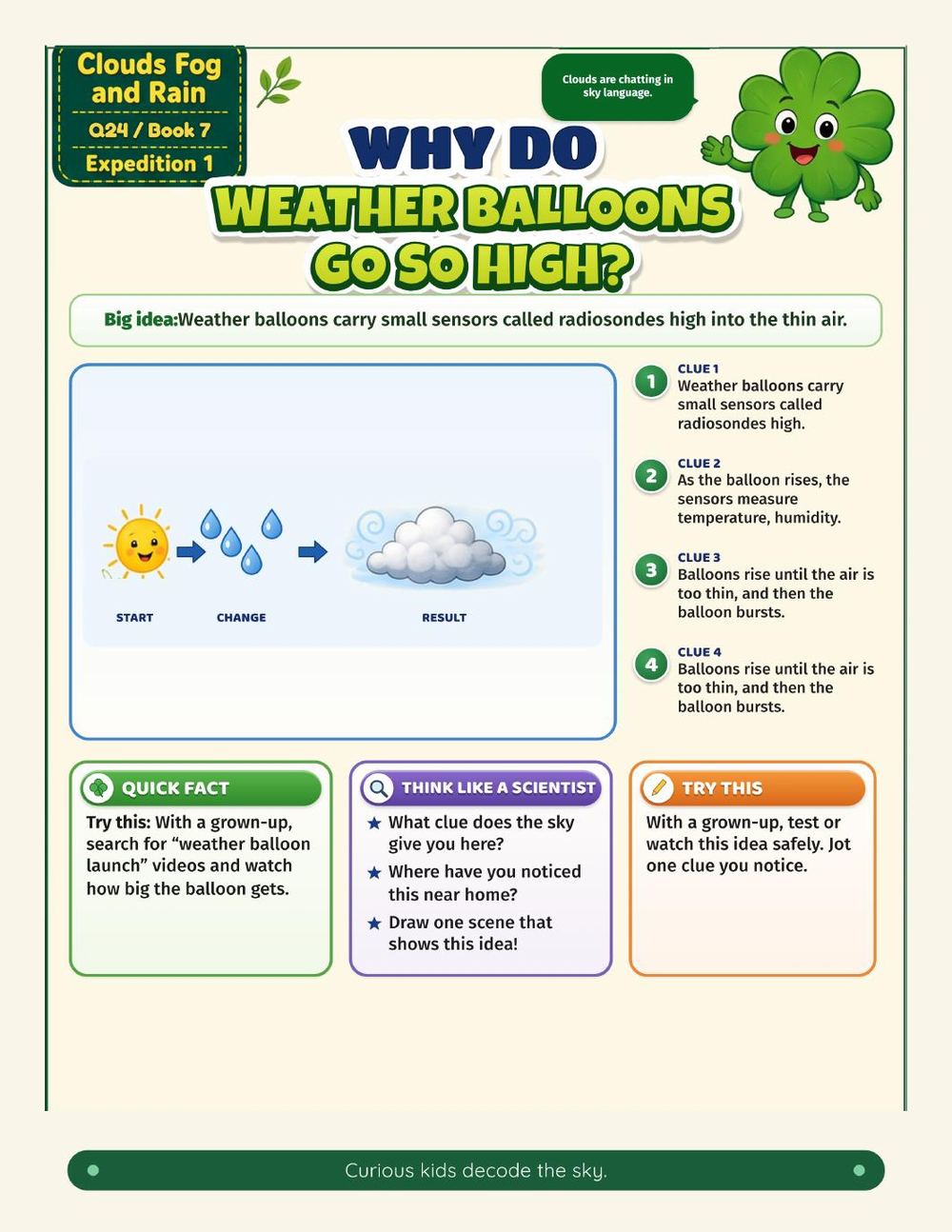
Weather balloons carry little sensors called radiosondes up into the sky. They rise far above the clouds, into thin air, to measure temperature, humidity, and wind. Forecasters use those measurements to predict tomorrow's weather.
From the book
Page from A Million Whys Book 7
More fun facts
- The National Weather Service launches weather balloons from 92 stations, mostly twice a day.
- A radiosonde flight can last more than two hours.
- The balloon can climb above 115,000 feet and drift more than 125 miles away.
- Up there, the radiosonde can face temperatures as cold as minus 130 degrees Fahrenheit.
- As the balloon rises, it expands until it is 20 to 25 feet wide, then bursts.
- After the balloon bursts, the radiosonde floats back to Earth on a small parachute.
- The radiosonde hangs about 85 feet below the balloon on a long string.
Questions kids ask
How high do weather balloons go?
They can climb above 115,000 feet before they burst.
What happens to a weather balloon at the end?
It bursts, and the radiosonde floats down on a small parachute.