
Book 5, Question 45
Tiny Tools! Why Do Labs Use Tiny Saws and Needles?
Fossils can be delicate, so lab workers clean off rock with very small tools like fine needles and tiny saws. They often work under a microscope. Slow, careful work helps protect every little detail.
From the book
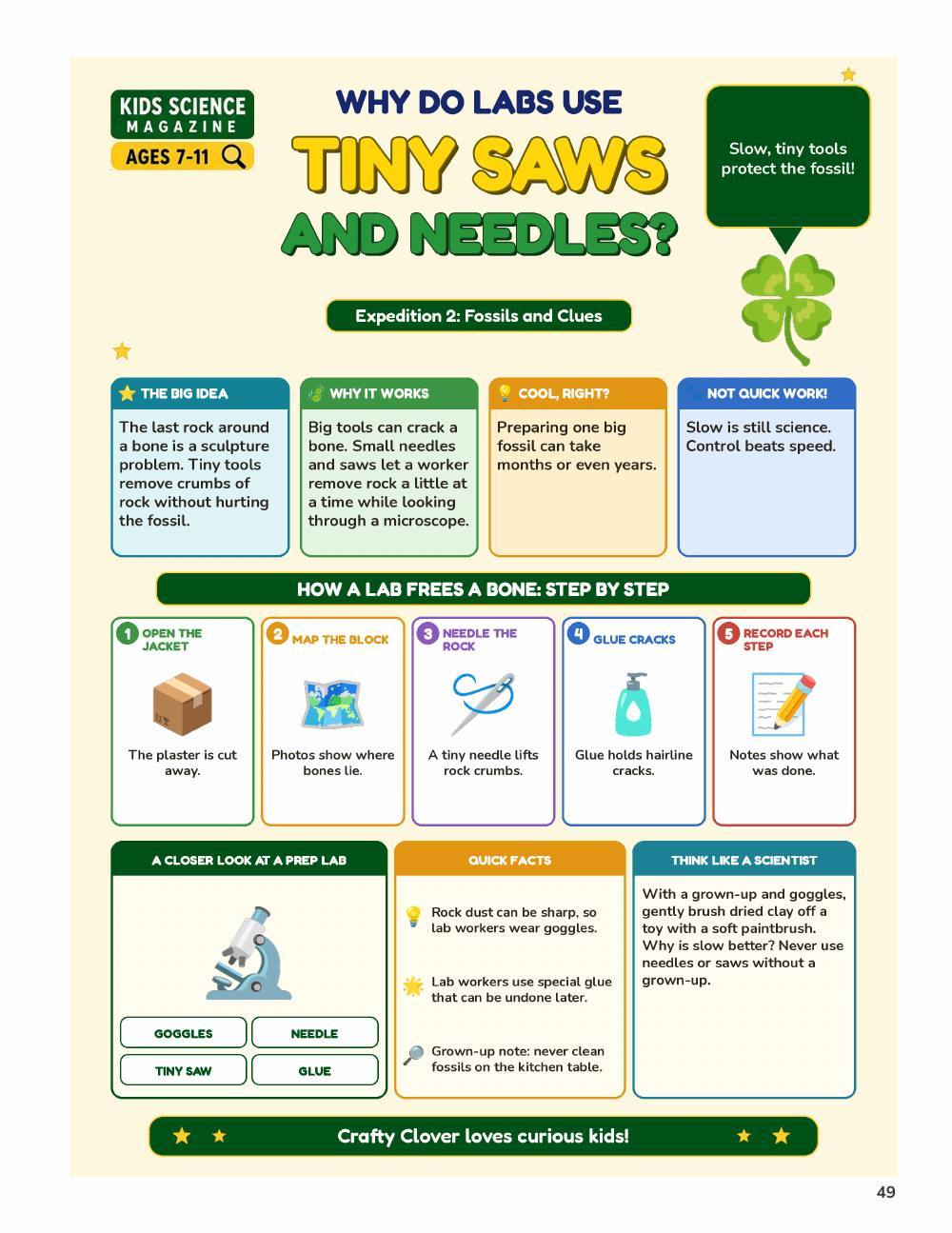
Page from A Million Whys Book 5
More fun facts
- Most tiny fossil work is done with fine needles held in the hand, each one shaped by the worker for the job.
- Needles are sharpened on a grinder and touched up under a microscope with a diamond wheel.
- A good dissecting microscope is one of the most important tools in a fossil lab.
- Airscribes are air powered tools that work like miniature jackhammers, popping off tiny flakes of rock around a bone.
- Trays sit around a fossil to catch any little pieces that fly off.
- Sandbags help hold a fossil steady and rest the worker's wrists while using the microscope.
- A tiny sandblaster that sprays baking soda can clean off a last thin film of dust.
Sources: American Museum of Natural History
Questions kids ask
Why not use a big hammer?
Fossils can be very delicate, so workers remove rock bit by bit with fine needles and small air tools, often under a microscope.