
Book 3, Question 110
Why Do Ice Skates Glide?
A skate blade is a thin metal edge that puts your weight on a tiny line of ice. Pressure plus a slick, water-like layer on the ice lets the blade slide instead of stick. Ice is already slippery.
From the book
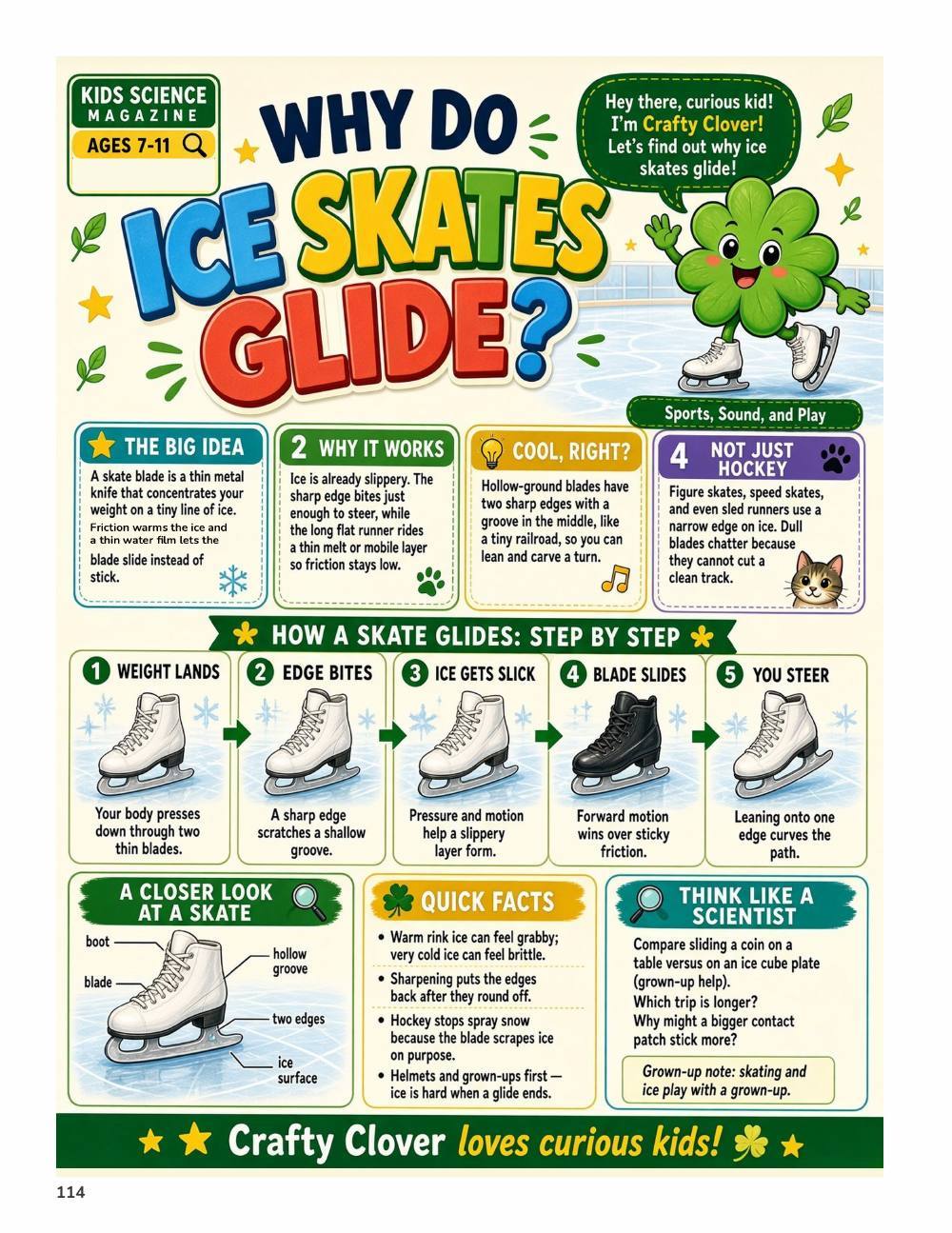
Page from A Million Whys Book 3
More fun facts
- Ice skates date back to the Bronze Age, when people in eastern Europe and Russia made skates from animal shin bones.
- In the Netherlands in the 1400s, skating was the most common way to travel in the cold months.
- The Dutch have won more speed skating medals than any other country in Olympic history.
- A long blade spreads a skater's weight, so it does not sink as much into the ice and glides with less friction.
- Skates glide on a very thin layer of water on top of the ice.
- Scientists still debate exactly why ice is so slippery. One old idea is that the pressure of a skate melts the ice, but people slip on ice even without that much weight.
Sources: Smithsonian Magazine, Scientific American, Science News Explores
Questions kids ask
What were the first ice skates made of?
Some of the first ice skates, from the Bronze Age, were made from animal shin bones.