
Book 1, Question 144
Why Do Cookies Spread in the Oven? Butter, Bubbles and Heat!
Ever wondered why a round ball of dough turns into a flat cookie? In the oven, butter melts and the dough loosens, bubbles puff the cookie, and then heat sets the edges. The page says colder dough spreads less. Compare a recipe that chills the dough first to see what changes.
From the book
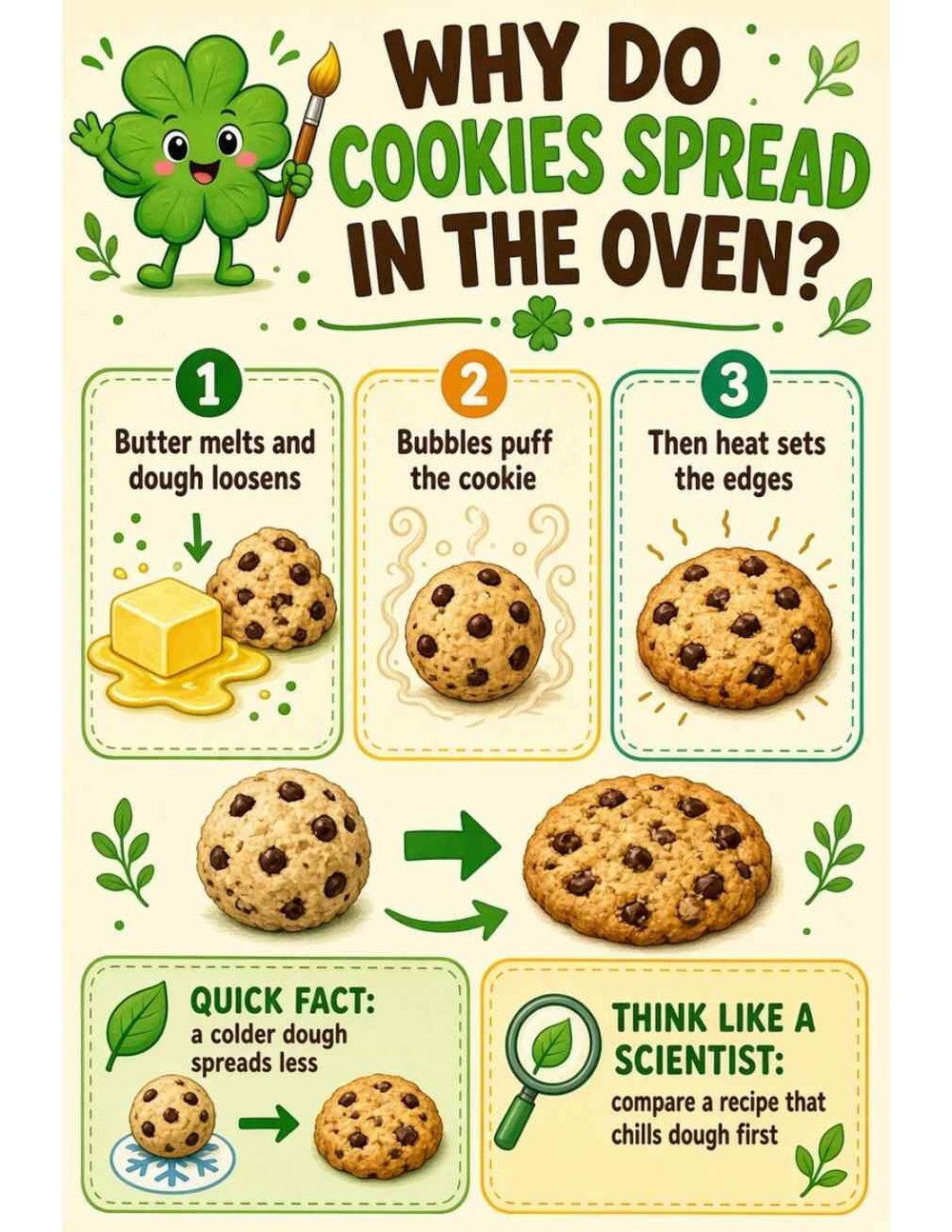
Page from A Million Whys Book 1
More fun facts
- In the oven, many things happen at once: proteins firm up, starches soak up water, fats melt, sugars brown and gas expands.
- When the butter melts, its water turns to steam, and the steam helps cookies puff up.
- One chef's tip: chill cookie dough for about half an hour so the butter doesn't melt before the rest of the dough sets.
- If the butter is too warm, cookies can spread into a flat puddle.
- More white sugar makes a crispier cookie, and more brown sugar makes a softer one, because brown sugar has molasses and more moisture.
- As cookies cool, they deflate a little because the air inside them cools down.
- The name chocolate chip is older than the cookie. In the 1890s, it was used for candy made of molasses coated in chocolate.
Sources: ICE, Smithsonian Magazine
Questions kids ask
Why do some cookies turn flat?
The butter melted before the rest of the dough had time to set.
How do you make cookies softer?
Use more brown sugar, which holds more moisture than white sugar.